

 NZ Freephone
 World Day of Prayer 2026
“I Will Give You Rest: Come”
Matthew 11:28-30
Friday 6 March, 2026
The World Day of Prayer (WDP) movement in Nigeria stands as a powerful testament to the unity and strength of Nigerian women. Introduced in 1961, the movement has grown to encompass women from various Christian denominations across the country, fostering ecumenical cooperation and spiritual solidarity. Since its inception, WDP has provided a platform for addressing social, political, religious, and economic issues affecting families and communities.
In August 2017, at the WDP International Committee (WDPIC) Meeting in Brazil, WDP Nigeria was selected to be the Writer Committee for 2026, with the theme, ‘I Will Give You Rest: Come’ (Matthew 11:28). Truly, grace found WDP Nigeria in 2017, as it was still in its early stages of national organization. Despite their fledgling status and organisational challenges, they were honoured with the invitation to become a Writer Committee.
WDP Nigeria has continued to grow as an organization by establishing zonal structures across the country. The movement has gained significant ground, with celebrations now occurring at national, state, and local church levels across Nigeria.
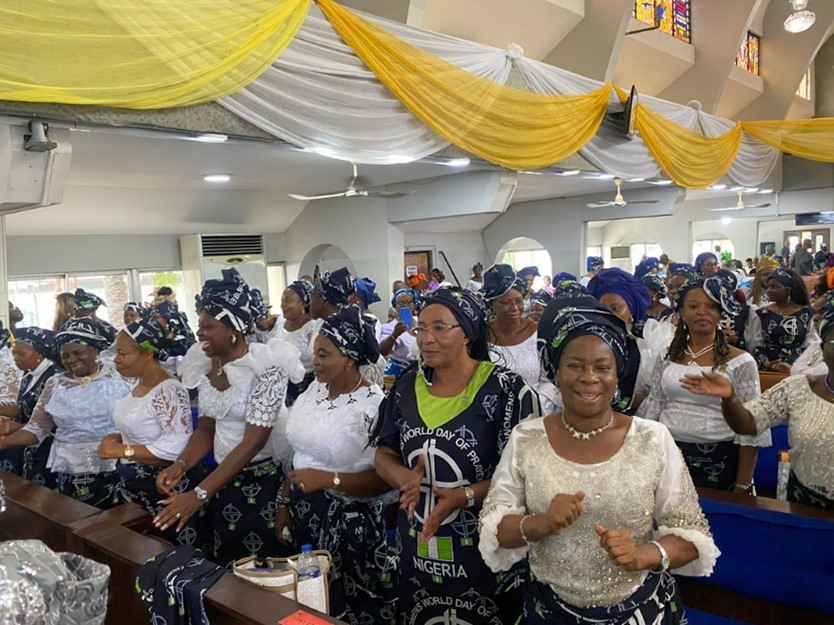 The 2026 World Day of Prayer focusing on Nigeria brings a powerful invitation drawn from Matthew 11:28-30. At a time when people worldwide are carrying heavy burdens, our Nigerian sisters offer profound insights into finding rest in God.
Through their exploration of different kinds of burdens – shame, systemic oppression, religious persecution, poverty and despair – the writers help us understand both the weight of human suffering and the depths of divine rest. Their work shows us that true rest is not just about physical relief, but about transformation through God’s grace and community support.
This theme is beautifully expressed across all programme components of the 2026 World Day of Prayer:
- The Worship Service features a playlet about a young girl named Chioma and stories of three Nigerian women: Beatrice, Jato, and Blessing. Their experiences reveal how God provides rest through community support, faith, and hope.
- The Bible Study explores divine rest from creation to Jesus’ time, examining wisdom traditions and Jesus’ transformation of rest from rigid rules to liberating mercy.
- The Children’s Programme includes prayers, storytelling, and other activities that help children understand how they can both receive and extend God’s rest to others.
The Nigerian WDP committee has woven together their cultural wisdom with the universal need for rest. Through symbols like the calabash bowl, which represents both daily sustenance and divine provision, they remind us how God meets us in our weariness. We all have a part to play in helping and as in previous years, our offering from the 2026 WDP will support women’s economic start up programmes and livelihood initiatives in Nigeria.
The resources including music, children’s materials, a Bible Study on Ephesians 4: 1-3 and background are available at: https://www.worlddayofprayer.org.nz/
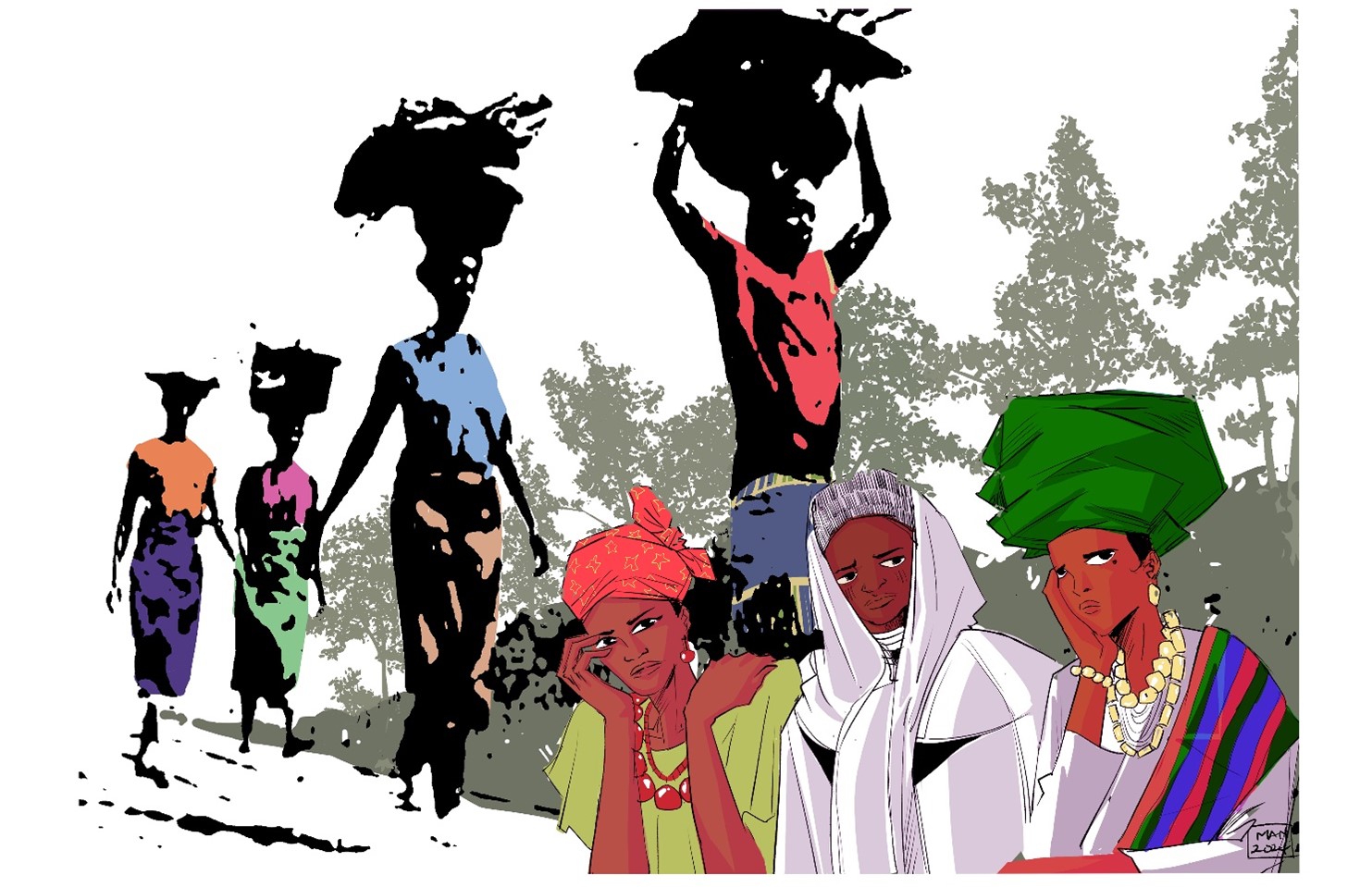 Gift Amarachi Ottah, a final-year Mass Communication student at Alex Ekwueme Federal University Ndufu-Alike in Ebonyi State, draws inspiration from her home state of Abia in Nigeria. Following her family’s tradition in creative arts and printing, Gift has developed a unique artistic voice that speaks to the struggles and strength of Nigerian women. She was motivated to design this artwork for the 2026 World Day of Prayer program because of the burdens that Nigerian women are facing. She hopes that her art will help to amplify their voices.
“My artwork depicts the daily reality of rural Nigerian women, whose lives are marked by endless labour from sunrise to sunset. These women traverse treacherous paths to their farms, often carrying both their harvest and their children – a toddler strapped to their back, a heavy load balanced on their head, while guiding other children along unmaintained roads through thick bush. 
The artwork also shows three women sitting together, their different traditional attire representing Nigeria’s diverse cultures. Though they come from different ethnic groups, their shared experiences unite them. To meet their basic survival needs, these women carry burdens and traumas that are physical, emotional and spiritual.
Yet there is hope for the many burdens these people are carrying. These burdens become bearable when we respond to Jesus’ invitation in Matthew 11:28, “Come to me, all you who are weary and are carrying heavy burdens, and I will give you rest.” When we bring our weariness to Christ and support one another in community, we find rest and strength to continue our journey.”
For more information, please contact: Cornelia Grant, National Chairperson
December 15, 2025